


Course Catalogue
2. DEGREE AWARD AND CAREER PROSPECTS
3. ATTENDANCE AND ACADEMIC CALENDAR
5. COLLABORATIONS – EVENTS – CONFERENCES
6. STUDENT ASSOCIATION – ALUMNI NETWORK
7. CONTACT INFORMATION DIRECTORY
APPENDIX: CURRICULUM FOR THE ACADEMIC YEAR 2025–2026
1. GENERAL INFORMATION
The Patriarchal University Ecclesiastical Academy of Crete (PUEAC) is located at 10 Alkiviadou St., Heraklion 71307, Crete. It is housed in the buildings of the Holy Monastery of Saint George Epanosifis. The PUEAC website is https://aeahk.gr/. The PUEAC also maintains a YouTube channel for publishing events, conferences and other activities of the academic community.
The PUEAC is a degree-granting higher education school of the Orthodox Church in Greece supervised by the Ministry of Education, Religious Affairs & Sports under Law 3432/2006 (Government Gazette 14/Vol. A’/03-02-2006), as amended by Law 4823/2021, which governs its structure and operation. It was renamed the “Patriarchal University Ecclesiastical Academy of Crete” by Article 20 of Law 4301/2014 (Govt. Gazette 223/Vol. A/07-10-2014).
The PUEAC, established in 2006, is the successor of the former Higher Ecclesiastical School of Crete, founded in 1992, which offered three-year courses. The Higher Ecclesiastical School of Crete was inaugurated by His All-Holiness the Ecumenical Patriarch Bartholomew, who also awarded degrees to its first graduates in 1995. The close connection between the Ecumenical Patriarchate and the PUEAC is therefore evident, a fact that also explains why the latter was later renamed “Patriarchal”.
The PUEAC is the only higher institution of theological education in Crete. Following the merger of the corresponding Ecclesiastical Academies of Thessaloniki and Vella Ioannina (Law 4823/2021), the PUEAC is one of the two Academies remaining in Greece. The fact that the PUEAC meets the educational needs not only of Crete but also of other regions of the country and abroad highlights its importance among higher institutions of ecclesiastical and theological education.
Administration: Concerning its mode of operation, the Institution retains the right of self-governance, in which the Academic Council plays a leading role; it is composed of the incumbent President (a member of the permanent teaching staff) and the Academy’s Teaching Staff of all ranks. The Academy’s teaching body also includes Members of the Special Teaching Staff and seconded doctoral faculty from primary and secondary education to provide autonomous applied teaching. Administrative support is provided by the Secretariat, which operates at the Directorate level. According to Joint Ministerial Decision No. K.Y.A. 87354/B1/01-09-2006 (Government Gazette 1448 B’/2006), the PUEAC Secretariat is organized into four Departments: the Human Resources Department, the Financial Management and Procurement Department, the Academic Affairs and Student Welfare Department, and the Administrative Services Department. Furthermore, by Joint Ministerial Decision No. K.Y.A. 132285/B1/07-12-2006 (Government Gazette 1861 B’/2006), a Library is established at each University Ecclesiastical Academy; it is organized and operates at Department level under the direct supervision of the Academy Secretary. The Library supports the PUEAC’s educational and research work, contributing substantially to its overall administrative and academic operation.
Institutional facilities: The Academy is equipped with learning facilities, including an auditorium that is also used as an events hall, classrooms with audiovisual equipment, a study area and a computer lab. More specifically:
Auditorium: The Auditorium, in addition to serving as a classroom, is also used as the PUEAC Events Hall. It is a modern, functional venue for academic and cultural activities. It has a capacity of 220 seats, a stage and full audiovisual equipment, such as a projector, a sound system and a sound console. It is also equipped with a camera for teleconferencing or live event streaming, as well as a desktop computer (PC) and a laptop. The hall hosts symposia, workshops and conferences, enhancing the Academy’s outreach. The graduation ceremony is also held here.
Classrooms: The south wing of the Academy complex houses eight classrooms with internet access.
Library: The Academy library was established in 1992, the year the Higher Ecclesiastical School of Crete was founded. It is housed in a separate building and holds approximately 10,000 catalogued volumes, and a large number of journals, digital discs and valuable materials available for borrowing and study by students, teachers and any interested readers. The catalogued books were acquired through donations or purchases and adequately cover the fields of Theology, History of the Orthodox Patriarchates, Musicology, Ancient and Modern Greek Literature, and related academic fields.
Computer Lab: The Computer Lab of the Patriarchal University Ecclesiastical Academy of Crete provides essential support for the educational and administrative functions of the Institution. As part of the Curriculum, students take computer science courses, acquiring modern digital skills. The lab is also used for other courses requiring computer use and for training teaching and administrative staff in new technologies and ICT applications. It has 10 computers, a projector and full-rack network equipment, which connects all areas of the Academy to the internet via fiber optics. A call center also operates via the SYZEFXIS II network.
Church of the Holy Protection (Agia Skepe): The Church of Agia Skepe in the Academy courtyard is the institution’s chapel, dedicated to the Most Holy Theotokos of the Holy Protection. It is the center of the Academy’s liturgical life. Weekly liturgical gatherings are held there (every Tuesday), in which students participate sacramentally as members of the Church and the academic community; they practice chanting, homiletics, ritual and typicon, and train in service at the Holy Altar, since their ultimate goal is ordination and entry into the ministry of the Church.
Chapel of the Cretan Saints: Located on the ground floor of the PUEAC, it is used for practical exercises in courses of ritual, typicon and the art of liturgical chanting.
Recording Studio: The PUEAC Recording Studio is a modern, professional sound studio that consistently supports the Academy’s educational, artistic and research activities. It features acoustically controlled spaces and high-quality recording, editing and mixing equipment, offering students hands-on learning in real production conditions. The studio is integrated into the teaching of courses related to sound, music production, acoustics and audiovisual media, supporting individual and group projects, artistic productions and research. It is also used for recordings and educational activities related to ecclesiastical music, traditional and secular art music, and European music, covering ecclesiastical, classical, traditional and contemporary repertoires.
The Recording Studio contributes significantly to the educational work of the Hieratical Studies Program, supporting students’ education and professional training. It is used for recording, analyzing and documenting ecclesiastical music, Byzantine chant, liturgical readings and sacred texts, aiding the development of vocal technique, interpretive ability and understanding of the acoustics of liturgical spaces
As part of the institution’s international collaborations, the Studio provides an organized and supportive learning environment, fostering international academic cooperation and the exchange of knowledge and best practices in audio production, traditional and contemporary music and the ecclesiastical musical tradition.
2. DEGREE AWARD AND CAREER PROSPECTS
The degree awarded by the PUEAC is equivalent to and on a par with the degrees of other higher education institutions in Greece. Graduates of the Hieratical Studies Program are classified in the University Education salary grade (Law 3432/2006, art. 5 §1). Upon obtaining their bachelor’s degree from PUEAC, graduates may pursue postgraduate studies in the field of Theological Science at a higher education institution in Greece or abroad.
PUEAC graduates have the option of becoming highly educated priests and being classified in the first salary grade for parish priests, progressing through the salary scales of the University Education category. It is also important that unmarried ordained priests who hold a PUEAC degree may be entered on the list of priests eligible for episcopal election without any further academic requirements, while graduates who do not wish to pursue ordination may be employed as administrative staff in the services of the Archdioceses and Metropolises of the local Orthodox Churches.
DEGREE EQUIVALENCY PROGRAM
The PUEAC also offers a two-semester Degree Equivalency Program for graduates of Higher Ecclesiastical Schools. In accordance with Articles 1 and 2 of Ministerial Decision 101133 (Government Gazette 1512/B/13-10-2006), holders of degrees from the Higher Ecclesiastical Schools of Athens, Thessaloniki, Vella Ioannina and Heraklion Crete, as well as equivalent Orthodox Ecclesiastical Schools abroad, may participate in the equivalency process toward the Hieratical Studies Program of the Higher Ecclesiastical Academies, provided they hold a certificate of completion of a six-year Gymnasium or Lyceum or a Level D certificate of proficiency in Greek.
Equivalency requires submission of an application, enrolment in the PUEAC Hieratical Studies Program or participation in the Special Accelerated Equivalency Program, and attendance and successful examination in the courses designated for each candidate. Applications must be submitted in person or online to the Secretariat in May each year and must be accompanied by a copy of the degree to be equated. For foreign degrees, an official translation and certification are required, together with a detailed syllabus and transcript, and a certificate of completion of a six-year Gymnasium or Lyceum or a certificate of proficiency in Greek. Optionally, additional academic degrees, continuing education certificates, research or published work and proof of foreign language proficiency may be submitted. Applications are evaluated by the Academic Council by 15 September each year. The number of courses each candidate is required to take and pass may not exceed one-quarter of the total courses of the Hieratical Studies Program.
ADMISSION REQUIREMENTS
Access to the PUEAC Hieratical Studies Program is open to Orthodox Christians who hold a high school (Unified Lyceum) leaving certificate or other equivalent secondary school diploma, in accordance with the higher education admission system, and also through transfer (placement) examinations. Additionally, the PUEAC may admit candidates in excess of the admission quota by up to 5% in the special category of serious medical conditions, provided they hold a high school leaving certificate from a Greek or foreign school. The Ministry of Education issues a circular listing the qualifying serious medical conditions each year.
Specifically, admission to PUEAC is effected as follows:
a) Through written Greek University Entrance Examinations.
Admission to the PUEAC Hieratical Studies Program is subject to the admission requirements for higher education. The Academy’s approved Program is listed in the Ministry of Education application form (1st Academic Field) provided to candidates at the Lyceums they attend or from which they have graduated. Eligible applicants are holders of:
- a Unified General Lyceum leaving certificate,
- a Unified General Ecclesiastical Lyceum leaving certificate,
- another equivalent secondary education school diploma, provided they are Orthodox Christians.
Admission is secured through the nationwide examinations, provided the candidate attains the minimum required score (EVE) for entry to the school, set at 8 on the 20-point scale. Below this threshold, admission and enrollment in PUEAC are not possible. Additionally, up to 10% of places are reserved for candidates who have obtained the certificate referred to in Article 1, paragraph 13 of Law 2525/97, as amended by Article 1, paragraph 1 of Law 2909/01.
b) Through Transfer (Placement) Examinations.
The PUEAC conducts annual transfer examinations for the Hieratical Studies Program. In accordance with Law 3432/2006, art. 4 §5, admission to the PUEAC Hieratical Studies Program by transfer examinations is open to male graduates of Higher Education Institutions, Technological Educational Institutes or equivalent institutions, Higher Schools of Pedagogical and Technological Education in Greece or abroad recognized by the Hellenic National Academic Recognition and Information Center (NARIC – DOATAP), holders of degrees from higher education institutions offering two-year and multi-year programs under the jurisdiction of the Ministry of Education, Religious Affairs and Sports and other Ministries, as well as clergy who are graduates of the Fourth Grade of Ecclesiastical Lyceums or holders of a one-year course diploma from Public Institutes of Vocational Training (level 1) under Article 6, paragraph 1, case a of Law 2009/1992 in ecclesiastical or theological subjects. Graduates of Vocational Training Institutes (IEK), Higher Vocational Training Schools (SAEK) and the Post-secondary Apprenticeship Year may also participate provided they hold a high school leaving certificate and, following a successful initial vocational training certification examination, a Vocational Education and Training Diploma (level 5 of the National Qualifications Framework) or an equivalent qualification in a related field. The ranking of graduates is determined by written examinations in three courses of the Hieratical Studies Program designated by the Academic Council. The number admitted by placement cannot exceed the number of annual intake places (Law 3432/2006, art. 4 §9a).
Required documents:
1. Candidate’s application.
2. Copy of degree or certificate of completion of studies.
Documents are submitted online from 1 to 15 November at  . Placement examinations are held between 1 and 15 December of each academic year. The syllabus for the placement examinations is determined by the Academic Council and posted on the PUEAC website in the section on placement examinations, together with all required documents and the candidate application form.
c) Admission of Candidates beyond the Intake Quota.
1. Candidates falling under the special category “foreign nationals not of Greek descent” of Article 2, paragraph 4, case iv of Law 2525/1997 (A’188) who are proposed by the Church of Greece may be enrolled in the PUEAC in addition to the intake quota, exceeding the quota of places permitted under Article 2, paragraph 4, case b of Law 2525/1997, provided they have: a) the approval of the E4 Directorate of Religious and Ecclesiastical Affairs of the Ministry of Foreign Affairs and b) a positive recommendation from the Supreme Scientific Council (Law 3432/2006, art. 4 §6).
2. Candidates falling under the special category “foreign nationals not of Greek descent” of Article 2, paragraph 4, case iv of Law 2525/1997 who have received a scholarship from the Church of Greece may be enrolled and occupy up to 10 places at the PUEAC, in addition to the intake quota, exceeding the quota of places permitted under Article 2, paragraph 4, case b of Law 2525/1997, provided they have a) the approval of the Ministry of Foreign Affairs and b) a positive recommendation from the Supreme Scientific Council (Law 3432/2006, art. 4 §7).
3. ATTENDANCE AND ACADEMIC CALENDAR
Curriculum: From its inception, the PUEAC offered two study programs: the Hieratical Studies Program and the Ecclesiastical Music and Chanting Program. The latter was abolished by Law 4823 /2021, art. 164-165. Since 2021, the PUEAC has continued to offer the Hieratical Studies Program and admit students. The curriculum is presented in detail in the Appendix of this study guide.
General information on the Program: Attendance in the Hieratical Studies Program is mandatory, and lectures are held in-person. The PUEAC Hieratical Studies Program has a minimum duration of four academic years, divided into eight semesters—four winter and four spring. Under the current curriculum, students are required to take 8 compulsory courses and 2 elective required courses each semester in order to complete 30 ECTS-equivalent credit units per semester, reaching the required total of 240 credit units for the degree. Note that in the 8th semester the number of required courses may vary due to the thesis. Α final thesis is mandatory for graduation. Course descriptions specify the prerequisite modules required for specific semester courses.
Practical training: A compulsory semester-long internship is not required for graduation. However, in order to receive their degree, students must, as part of the Homiletics course, give a sermon during the Divine Liturgy in the Church of Agia Skepe, located on the PUEAC premises. Practical exercises in Music, Homiletics, Liturgy and Ritual are also held in the Church of Agia Skepe during semester courses. Additional practical needs of semester courses are met in the Chapel of the Cretan Saints, also located on the Academy premises (see above).
Thesis: In the 8th semester, students must submit a written thesis prepared according to the academic writing standards taught during their studies. Two faculty members are appointed for this purpose, a primary supervisor and a co-supervisor, who monitor the progress of the thesis, grade it according to the approved grading scale, and draft the final recommendation report to the Academic Council, which grants final approval of the successful completion of the thesis. The student selects the primary supervisor, while the thesis topic is chosen in consultation with that supervisor, based on the supervisor’s subject area.
Language of instruction: Courses are taught in Greek; however, for incoming international students the permanent teaching staff can provide instruction in English. Some courses may be taught in French upon arrangement with the relevant instructors.
Educational activities: In addition to attending classes, students may participate in educational activities on and off campus (e.g., at monasteries and institutions in Crete). Information on these activities is available on the PUEAC website.
Written and oral examinations: Course examinations are either written or oral. A mandatory requirement for the degree is the completion of a thesis supervised by two PUEAC faculty members. Under Law 4957/2022 (art. 65, §4c) the Academy provides a dedicated on-site oral examination space for students with specific learning disabilities. Candidates with disabilities and special learning needs are examined orally or in writing according to their abilities; those wishing to be examined orally must submit, with their supporting documents, an application accompanied by a relevant medical certification issued in accordance with the current disability certification system of the competent medical committee, demonstrating that they are unable to sit written examinations.
Grading system: The PUEAC follows the grading system widely used in Greek higher education institutions: PASS (5.00–6.49), VERY GOOD (6.50–8.49), EXCELLENT (8.50–10.00). Therefore, in order to receive a degree a student must have passed all program courses with at least a PASS grade on the relevant grading scale.
Academic calendar: The academic calendar is set at the start of each semester and posted on the PUEAC website.
Academic Calendar for 2025–2026:
- Winter term courses: 10/06/2025 to 01/18/2026.
- Winter term examination period: 01/19/2026 to 02/03/2026.
- Winter term extended examination period: 02/04/2026 to 02/06/2026.
- Spring term courses: 02/16/2026 to 05/31/2026.
- Spring term examination period: 06/08/2026 to 06/24/2026.
- Spring term extended examination period: 06/22/2026 to 06/24/2026.
- Final thesis submission deadlines with the supervisor’s recommendation report:
a) 06–17 October 2025 for the September 2025 session.
b) 09–20 February 2026 for the Winter term.
c) 24–30 June 2026 for the Spring term.
Student academic affairs: Registration of first-year students and course registration/renewal for continuing students is conducted online. The Secretariat is responsible for matters relating to courses, first-year registrations, renewals, creation of online accounts, certificates, attestations, documentation, graduation, transfers and student deregistration. Mrs. Maria Kakoulidou is the administrative secretary. Contact: , in person at her office during office hours (mornings), or via the call center at +30 2810-232193. Online information on the above topics is provided on the PUEAC website.
Maximum duration of study: The maximum duration of study follows the “n+2” rule applicable to all Greek universities, meaning that the maximum duration of a bachelor’s degree program with a minimum duration of eight academic semesters is extended by four additional semesters (two years). An exceptional extension beyond the maximum duration for serious health reasons, for the student or close relatives, may be granted under Article 76 of Law 4957/2022.
Transfers: The PUEAC ensures, on a case-by-case basis, that students who meet the necessary requirements have the option of transferring to and from the corresponding University Ecclesiastical Academy of Athens. Transfers are permitted only between institutions with the same orientation and university-level program of studies; transfer to a higher education institution other than the Higher Ecclesiastical Academy of Athens is not possible.
Student Welfare Office: The Academic Council has appointed Mrs. Maria Kakoulidou, a member of the permanent administrative staff, as the person responsible for student welfare. Interested parties may contact her via email at , in person at her office during office hours (mornings), or by phone at +30 2810-232193.
Student accommodation and meals: Students may be provided with daily meals and accommodation at the student residence of the Holy Archdiocese of Crete, provided they meet specific conditions and submit a relevant request to the residence’s secretariat. The student canteen is housed in a building adjacent to the PUEAC.
Housing allowance: Students who meet certain financial criteria may receive financial support through a housing allowance. The permanent administrative secretary and Acting Head of the Financial Management and Procurement Department, Mrs. Vasiliki Gkaga, is responsible for this matter. Students may contact her in person during office hours or via email at  .
.
Issues concerning vulnerable groups: The PUEAC handles matters concerning vulnerable student and staff groups sensitively, providing appropriate facilities, support and services. The Office of Student Affairs is responsible for vulnerable groups. Each academic year, the Academic Council appoints a permanent faculty member to be responsible for academic matters related to vulnerable social groups and inclusion. For the 2025–2026 academic year, the appointed faculty member is Assistant Professor Dr. Ioannis Lilis.
Healthcare for uninsured students and vulnerable social groups: Under the relevant legislation, uninsured persons and vulnerable social groups have the right to free access to all public health structures for nursing and medical care. More information:
Scholarships: The PUEAC awards a scholarship of one thousand euros (€1,000) to the top-ranking student who has passed all courses within exactly four years of study, following their graduation ceremony. The scholarship application is submitted to the Academy Secretariat (c/o Mrs. Kakoulidou). The PUEAC also informs students, via its website, of scholarships from the State Scholarships Foundation, bequests, Church bodies, foreign governments, and other opportunities.
5. COLLABORATIONS – EVENTS – CONFERENCES
The PUEAC maintains an International Relations Office responsible for developing and managing the institution’s international collaborations, such as implementing mobility programs for students and staff and participating in international higher education networks. The administrative management of the International Relations Department is jointly handled by the Secretariats of the Academic Council and Student Affairs.
Between 2014–2020, PUEAC held active accreditation for the Erasmus University Charter, and a new application for renewal of this accreditation is expected to be submitted in the calendar year 2026.
Each academic year, the Academic Council appoints a permanent faculty member responsible for academic coordination of mobility matters under the Erasmus+ program and the awarding of ECTS credits. For the 2025–2026 academic year the appointed faculty member is Associate Professor Dr. f. Avgoustinos Bairachtaris. This faculty member works closely with the colleague responsible for supporting students from vulnerable social groups.
Cooperation agreements: The PUEAC has signed cooperation protocols with the Volhynian Orthodox Theological Academy of the Ukrainian Autocephalous Orthodox Church, the Social Cooperative Enterprise “NEFELEONAS KOIN.S.EP.” (www.nefeleonas.gr), and the Revivart Association (revivart.ro) of Romania. During the current academic year, procedures are underway to sign cooperation protocols with the Hellenic Mediterranean University (https://hmu.gr/), the Hellenic Open University (https://www.eap.gr/), the Theological School of the Archdiocese of America “Holy Cross, Greek Orthodox School of Theology” in Boston (https://www.holycross.edu/), the Communication and Educational Foundation of the Holy Archdiocese of Crete (https://emi.iak.gr/) and the Pan-Cretan Folklore Association (https://www.psiloritis.org/). These initiatives demonstrate the possibility of collaboration in both practical and purely academic fields with local and international partners. The aim is to complete and sign these cooperation protocols within the current academic year.
Participation in conferences, events and radio programs: Through its teaching staff PUEAC has participated in numerous conferences in Greece and abroad. Research activities are presented in detailed faculty CVs posted on the Academy website. The PUEAC also organizes educational, scientific and cultural activities at its headquarters and in other Cretan cities. A detailed listing of these events is published on its website. In addition, faculty (permanent and seconded) and students participate in local and national radio and television programs. The following broadcaster websites attest to the PUEAC’s consistent participation in educational and cultural activities: a) https://radioiak.blogspot.com/2023/03/2022-2023.html b) https://ecclesiaradio.gr/ c) https://www.cretetv.gr/ and d) https://www.cretetv.gr/tv-show/orthodoxos-logos/.
Publications: To date the PUEAC has published seven Scientific Yearbooks as collective volumes that include conference papers presented at Academy-organized events and scholarly studies by its faculty. The contents of the Yearbooks are available on the Academy website. The PUEAC has also published a commemorative volume marking the fiftieth anniversary of the episcopacy of His All-Holiness the Ecumenical Patriarch Bartholomew, which includes a small music CD featuring hymns and songs performed by the Academy’s students and teachers.
6. STUDENT ASSOCIATION – ALUMNI NETWORK
Student Association: Every academic year, students set a date to hold student elections for the president, treasurer and members of the student association. The association represents the student body at the Academic Council on matters concerning the student community.
Alumni network: Members of the PUEAC student and alumni network communicate via the Facebook group: https://www.facebook.com/groups/50370859036.
7. CONTACT INFORMATION DIRECTORY
Contact details for PUEAC academic and administrative staff are available on the website:
• International Relations Office
APPENDIX: CURRICULUM FOR THE ACADEMIC YEAR 2025–2026
HIERATICAL STUDIES CURRICULUM 2025-2026
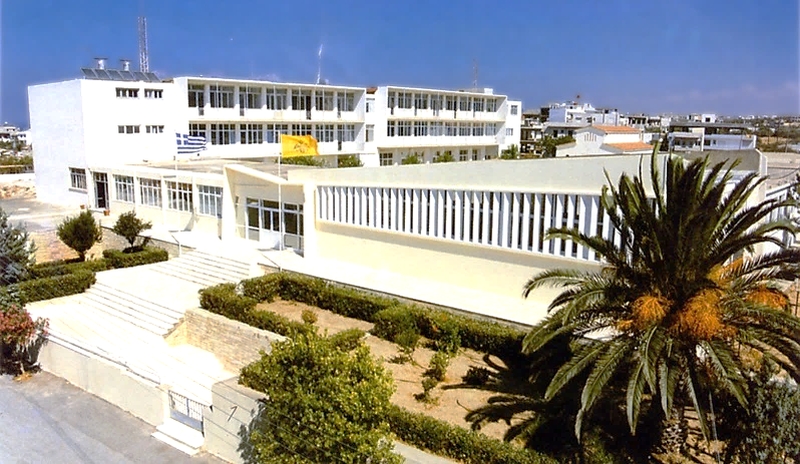
Fig. 1. The Patriarchal University Ecclesiastical Academy of Crete.
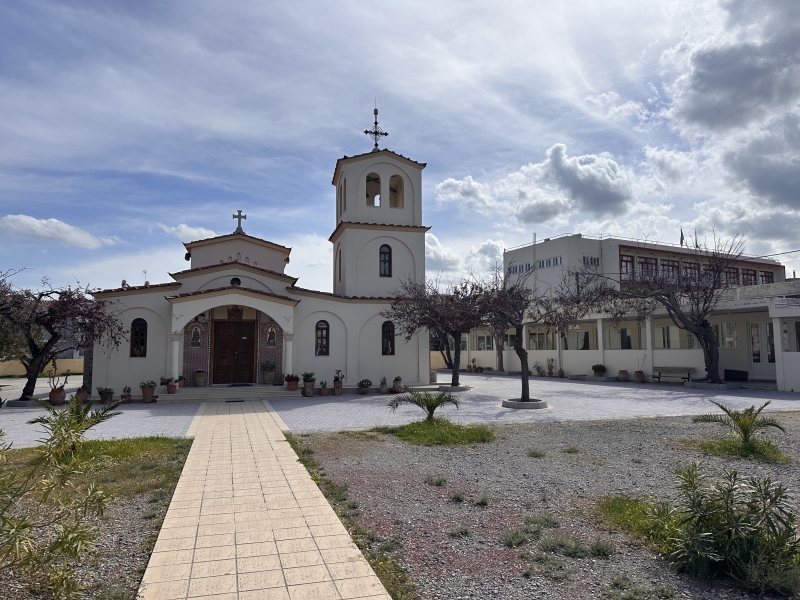
Fig. 2. The church of Agia Skepe and the student residence.
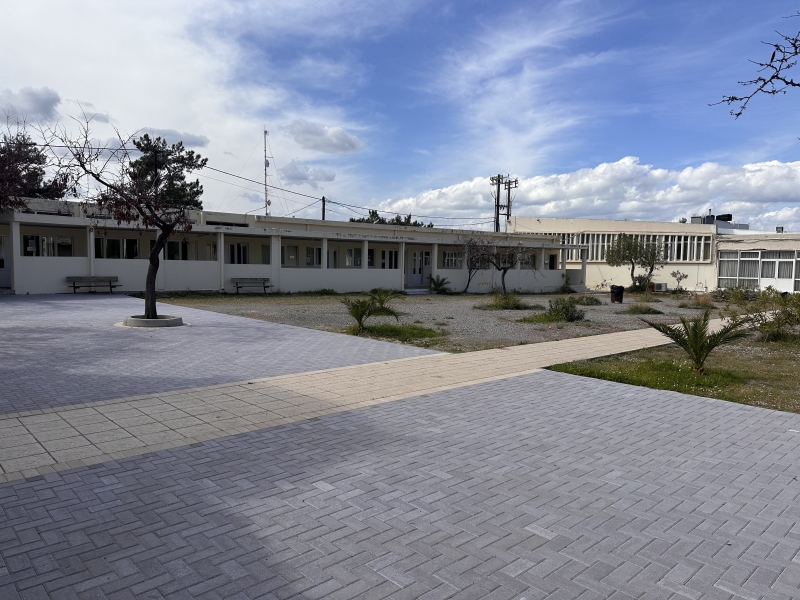
Fig. 3.Classrooms and Auditorium.
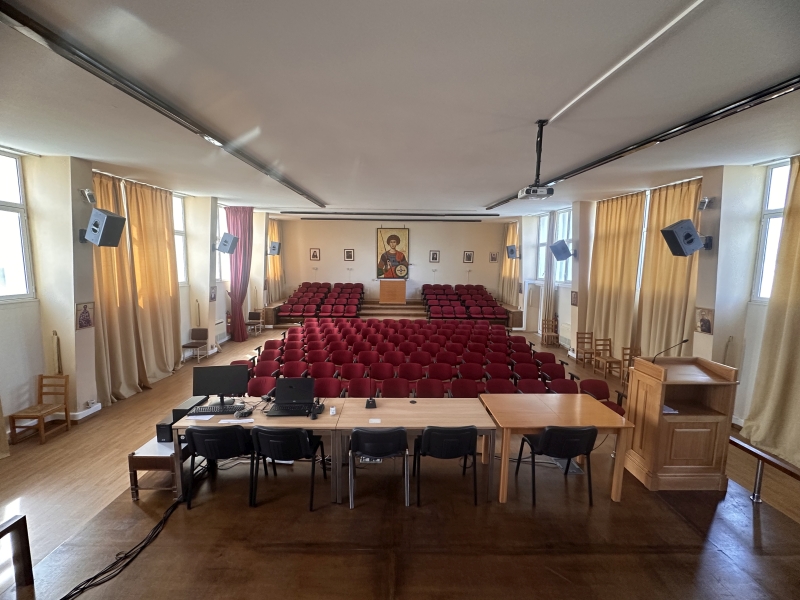
Fig. 4.Auditorium.
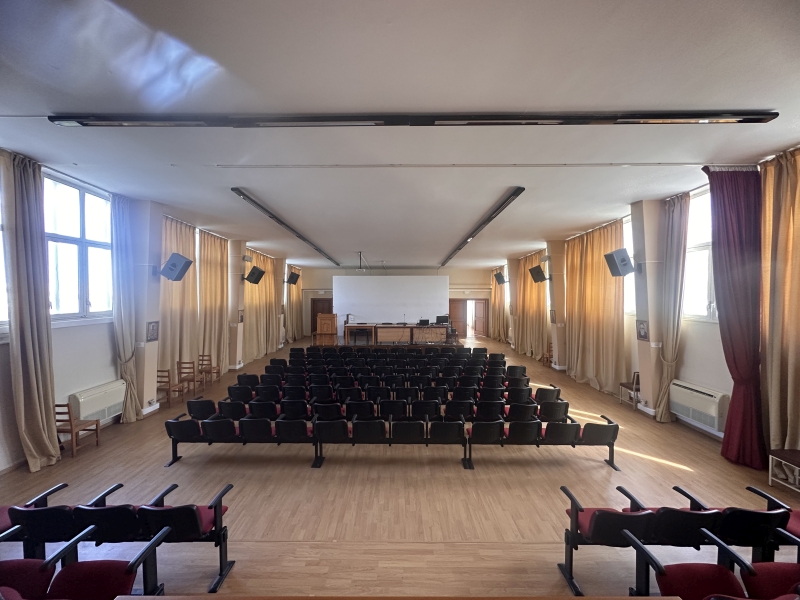
Fig. 5.Auditorium.
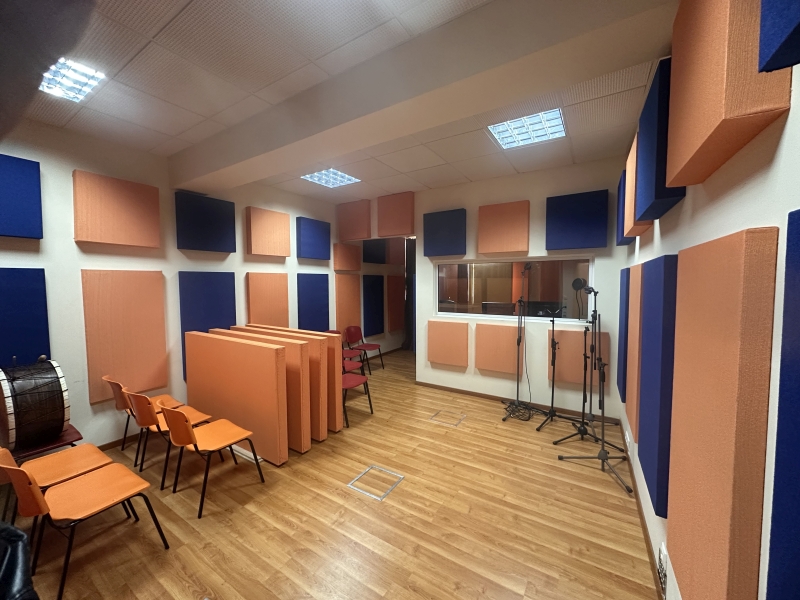
Fig. 6. Recording Studio.
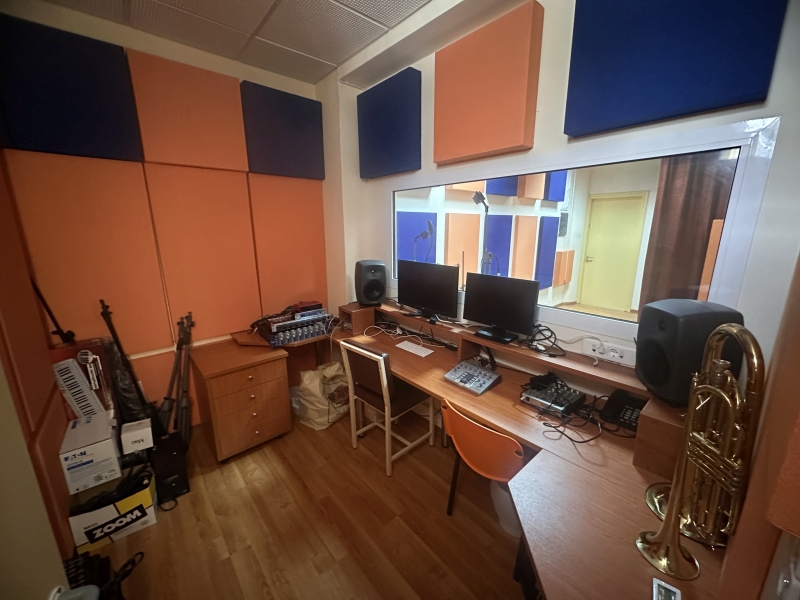
Fig. 7. Recording Studio.
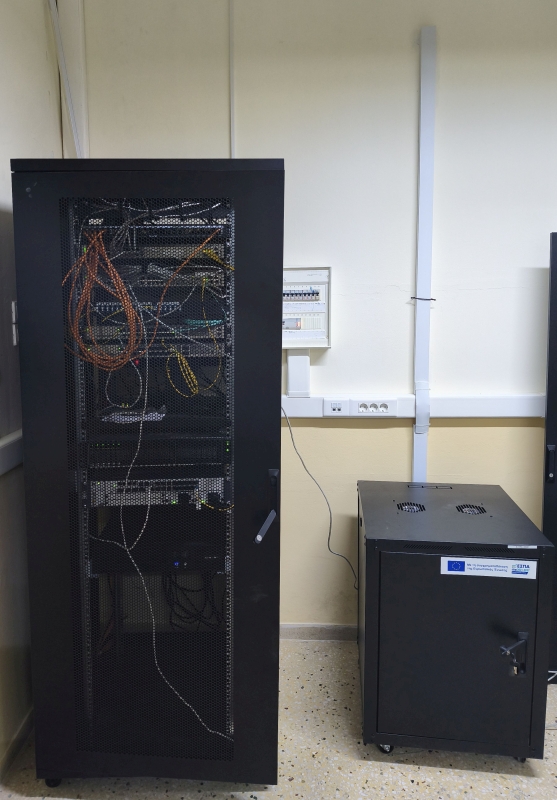
Fig. 8. Computer Lab.
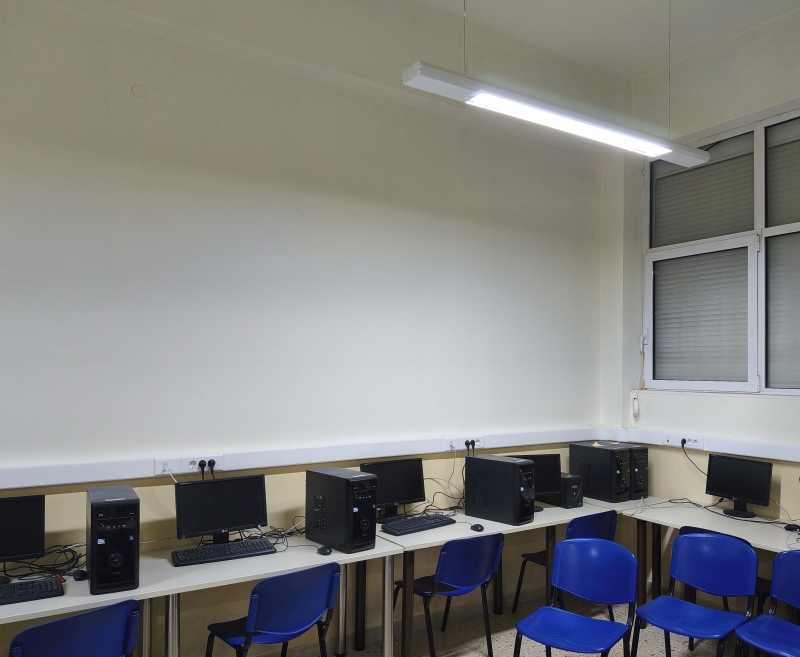
Fig. 9.Computer Lab.
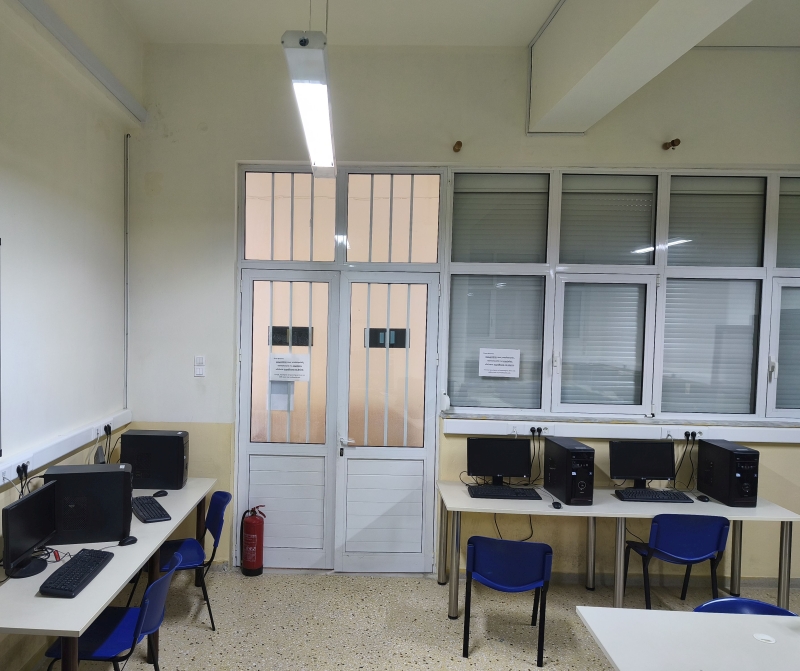
Fig. 10.Computer Lab.
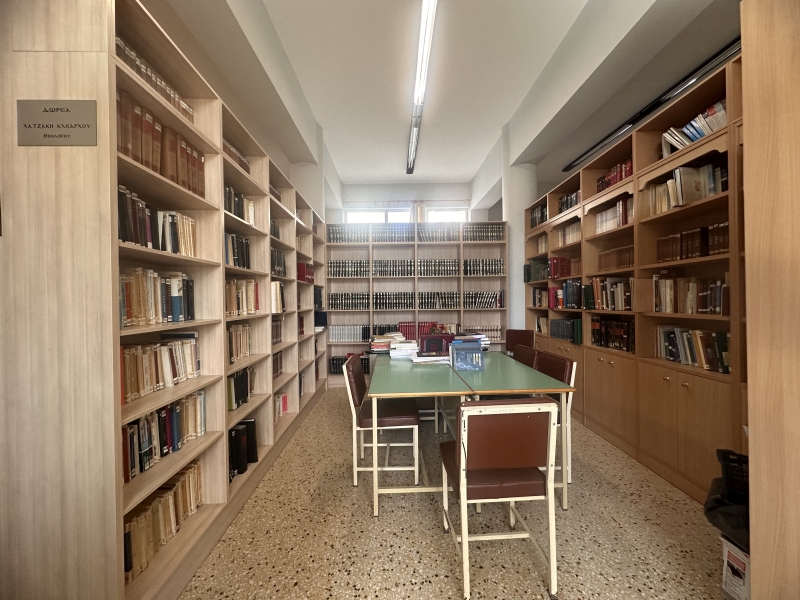
Fig. 11.Library.
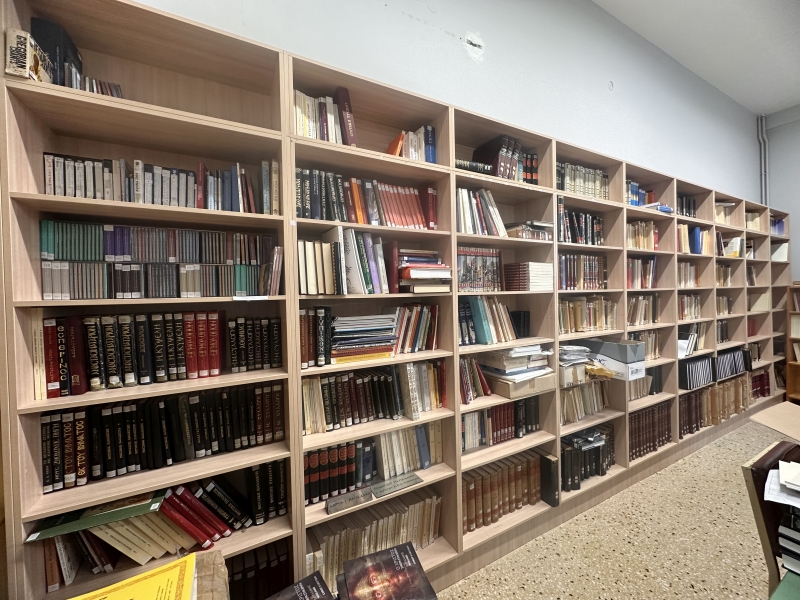
Fig. 12.Library.